
Free vs. Paid Disability Training Courses: Comprehensive Comparison
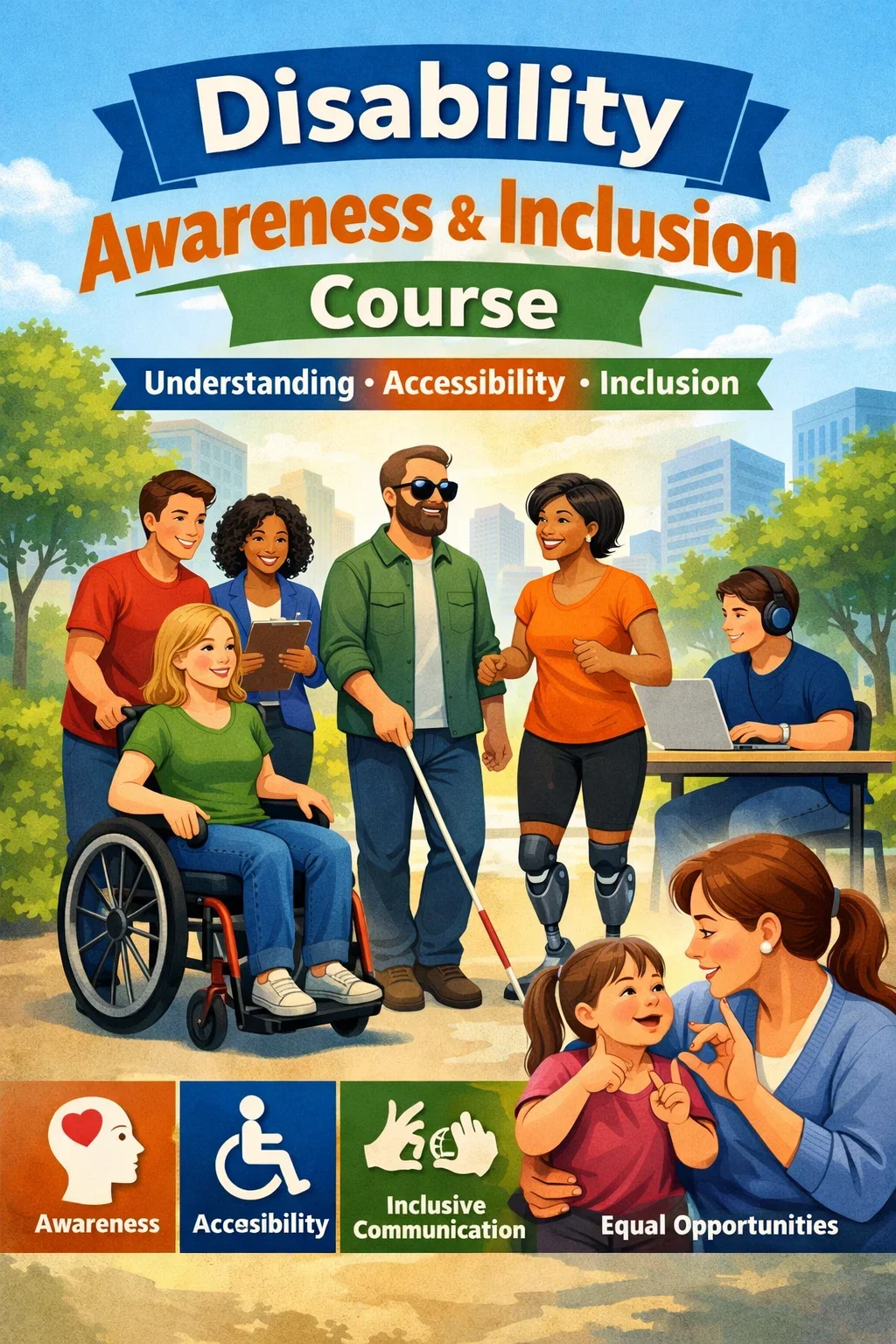
Free vs. paid disability training courses is not simply a budget question — it is a question of what your organization actually needs to change. Free courses offer broad foundational awareness and are a legitimate starting point, but they rarely produce the behavior shifts, cultural change, or role-specific competency that paid, customized training delivers. Start by defining the outcome you are trying to achieve, then choose the format — free or paid — that is genuinely built to get you there.
When organizations begin their disability inclusion journey, one of the first questions they ask is practical: what does training cost? The answer, technically, is that it can cost nothing — there are solid free resources available, and many of them are credible. But the more useful question is a different one entirely: what does the training need to accomplish, and what will it take to actually get there?
Free and paid disability training courses each have a legitimate place in an organization's learning strategy. Neither is automatically better. The choice between them — and the decision about how to combine them — depends on where your organization is in its disability inclusion journey, what specific competencies you are trying to build, who needs the training, and what you want people to be able to do differently when it is over.
This guide walks through both categories honestly: what free training does well, where it falls short, what paid training offers that free resources cannot replicate, and how to build a smart, layered approach that uses both effectively. The goal is not to recommend the most expensive option. It is to help you invest your training dollars where they will actually make a difference.
What Free Disability Training Courses Actually Cover
Free disability training exists across a wide range of formats — self-paced online modules, recorded webinars, government-produced compliance guides, downloadable toolkits, university open courseware, and nonprofit-developed awareness content. The quality varies, but the best of it is genuinely valuable.
Here is what strong free disability training typically covers well:
ADA Fundamentals and Compliance Basics
The Job Accommodation Network (JAN), the Equal Employment Opportunity Commission (EEOC), and the U.S. Department of Labor's Office of Disability Employment Policy (ODEP) all produce free, regularly updated training content on ADA compliance, reasonable accommodation, the interactive process, and employer obligations. This content is authoritative, legally accurate, and designed to be accessible to HR professionals and managers who need a foundational understanding of their legal requirements.
For organizations that are genuinely just starting — that have never conducted ADA training and have staff who do not understand their basic obligations — this content is a legitimate first step. It is also a useful reference resource for HR teams that need to look something up quickly or verify a specific legal standard.
Disability Awareness and Etiquette
A number of nonprofits, Centers for Independent Living, and disability advocacy organizations offer free webinars, videos, and written guides covering disability awareness basics: the difference between visible and invisible disabilities, person-first versus identity-first language, disability etiquette principles, and common misconceptions about disability in the workplace. Disability:IN, the National Disability Institute, and similar organizations offer free materials and recorded sessions that are grounded in the disability community's own perspective.
This content is useful for general staff education — building baseline awareness that helps reduce unintentional bias and improves everyday workplace interactions.
Self-Paced Awareness Modules
Some platforms offer free or low-cost self-paced modules on disability inclusion as part of broader DEI libraries. These are often well-produced, scenario-based, and designed for asynchronous completion — making them easy to deploy across a dispersed workforce. They are typically not customizable and not facilitated, but for organizations building general awareness at scale, they can be a cost-effective layer of the training strategy.
Where Free Disability Training Falls Short
Free training accomplishes what it is designed to accomplish: broad awareness and foundational knowledge. The gap between awareness and behavior change is where it tends to stop — and that gap is significant.
It Is Not Built for Your Organization
Free courses are built for a generic audience. They cannot account for your organization's specific culture, the particular challenges your managers face, the industry context that shapes how disability shows up in your workforce, or the history of inclusion — and exclusion — that employees with disabilities in your organization have already experienced.
When training is generic, the lessons stay generic. Participants learn concepts in the abstract but do not necessarily know how to apply them to the actual situations they will face next week with their actual team. The disability awareness training that changes behavior is the kind that mirrors the learner's real context back to them — and free, off-the-shelf content cannot do that.
It Does Not Create Accountability
Self-paced, self-directed free training is consumed privately and produces no accountability mechanism. There is no facilitator to ask a hard question that challenges a manager's assumptions. There is no discussion that surfaces the specific fears or misconceptions your team is carrying. There is no follow-up that checks whether anyone has done anything differently.
Organizations that rely on free self-paced modules as their primary disability training strategy often find themselves in a familiar pattern: training gets assigned, gets completed, completion rates get reported — and nothing changes. The checkbox has been checked. The culture has not moved.
It Cannot Address Organizational Specific Scenarios
The situations managers actually face when it comes to disability in the workplace are specific, nuanced, and often uncomfortable. A manager whose employee discloses a mental health condition for the first time. An HR professional navigating a complicated accommodation request from an employee with an invisible disability whose manager is skeptical. A team leader trying to understand how to be inclusive without singling someone out.
Free training can give people a framework. It rarely gives them the practiced, confident ability to navigate those moments well. That requires scenario-based learning, guided reflection, and the kind of facilitated practice that only customized, paid training can consistently deliver.
It Is Not Designed to Shift Culture
Culture change requires more than information. It requires people to examine their assumptions, confront their biases, hear from voices different from their own, and practice new behaviors in a supported environment. Free training is largely informational. The most important disability inclusion work — building psychological safety, shifting leadership mindset, reframing how accommodation is understood organizationally — requires a different kind of learning experience.
What Paid Disability Training Offers That Free Resources Cannot
Paid disability training exists on a wide spectrum — from off-the-shelf e-learning licenses to facilitated workshops to comprehensive organizational consulting engagements. The most valuable end of that spectrum shares some common characteristics that free content cannot replicate.
Customization to Your Organizational Context
Effective paid disability training is built around your organization — your industry, your workforce, your culture, your existing policies, and your specific gaps. A manufacturing organization has different disability inclusion challenges than a technology company, a healthcare system, or a nonprofit. A training that has been designed to address your actual context will land more meaningfully and produce more durable behavior change than content designed for an imagined average organization.
Customization also means that the examples and scenarios in the training reflect the real situations your employees encounter. When a manager recognizes their own workplace in the training material, the learning transfers. When the content feels irrelevant to their actual job, it does not.
Facilitation by Someone with Lived Experience
There is a meaningful difference between disability training delivered by someone who has read about disability and training delivered by someone who has lived it. The lived experience dimension is not decoration — it is one of the most powerful learning catalysts available.
A trainer who brings genuine personal experience of disability into the room can respond to real questions in real time, including the uncomfortable ones that participants are often afraid to ask. They can speak to what disclosure actually feels like, what it means to navigate an accommodation request as the employee rather than the HR professional, and why certain well-intentioned behaviors still land as exclusionary. That kind of training shifts perspective in ways that content alone cannot.
Role-Specific Depth and Differentiation
What a frontline manager needs to know about disability inclusion is different from what an HR specialist needs, which is different from what a senior executive needs, which is different from what all-staff awareness training should cover. Effective paid training is designed with those distinctions built in — delivering depth and specificity appropriate to each audience.
Generic free training tends to land somewhere in the middle: too basic for HR professionals who need substantive compliance knowledge, and too detailed for general staff who need a clear, practical overview of how to be good colleagues to people with disabilities. Paid training that is designed by role delivers more value to each audience because it was built for them specifically.
Ongoing Partnership and Consultation
The most effective disability training engagements are not single events. They are part of an ongoing relationship between the organization and the training provider — one that includes assessment of current gaps, design of the training experience, facilitation, follow-up, and continued consultation as the organization implements what it has learned.
That ongoing partnership is what distinguishes a training event from an organizational change effort. When a training provider is invested in your outcomes — not just in delivering a session — the work produces different results. Policies get revised. Hiring processes get redesigned. Managers come back with follow-up questions. Accommodation culture actually shifts.
Comparing Free and Paid Disability Training: A Side-by-Side Look
Dimension Free Training Paid / Customized Training Cost No direct cost; requires staff time to locate and assign Investment varies; typically includes facilitation, customization, and follow-up Coverage ADA basics, general awareness, etiquette fundamentals Role-specific depth, organizational context, behavior change focus Customization Generic; not adaptable to your context Built around your organization, culture, and specific gaps Facilitation Self-paced or recorded; no live interaction Live, facilitated; real-time questions, discussion, and scenario practice Lived experience Variable; many free resources lack disability community perspective Strong providers lead with lived experience as a core component Accountability No facilitated accountability; completion only Discussion-based; behavioral reflection and application built in Culture impact Limited; builds awareness, does not shift culture Designed to shift mindset and build lasting inclusive behavior Scalability Easy to deploy at scale across a dispersed workforce Can be scaled through hybrid, cohort, or train-the-trainer models Ongoing support Static content; no follow-up Partnership model enables consultation, policy support, and iteration Best for Foundational awareness; supplementary reference Sustained culture change; role-specific competency building
The False Choice: Why the Best Strategy Uses Both
The most sophisticated disability inclusion training strategies do not choose between free and paid — they use both deliberately, at different points in the learning journey and for different purposes.
A layered approach might look like this:
Layer 1: Foundational awareness (free resources). All-staff awareness content — covering disability basics, inclusive language, and a general introduction to what disability inclusion means in the workplace — can be delivered efficiently and cost-effectively using quality free resources. This creates a shared baseline of knowledge across the entire organization.
Layer 2: Role-specific competency building (paid training). Managers, HR professionals, and team leads need training that goes significantly deeper — customized to their role, facilitated by someone with expertise and lived experience, and focused on the specific situations they will face. This is where paid, customized training delivers its highest value.
Layer 3: Leadership alignment (paid consultation). Senior leaders need to understand disability inclusion not just as a compliance matter but as a strategic priority. Executive-level engagement — which often looks more like facilitated conversation and strategic consultation than traditional training — is typically a paid engagement that shapes organizational direction and accountability.
Layer 4: Ongoing reinforcement (mixed). Sustaining disability inclusion culture over time requires continued learning — new content as policies evolve, refreshers as staff turnover brings new employees, and updated training when significant organizational changes occur. This layer can draw on both free resources and ongoing consulting relationships, depending on the complexity of the need.
This layered model ensures that the organization is not over-investing in foundational content or under-investing in the role-specific, facilitated training that actually changes behavior. It also ensures that training investment is targeted where it will produce the greatest return.
What to Look for in a Paid Disability Training Provider
Not all paid disability training is created equal. The market includes providers with deep expertise and lived experience, and providers with polished delivery and shallow substance. Knowing what to look for — and what to ask — is essential to making a sound investment.
Lived experience of disability. The most credible disability training is led or designed by someone with direct lived experience of disability. This is not the only qualification that matters, but it is a significant one. Ask prospective providers directly: does the person delivering this training have personal experience with disability?
Customization process. How does the provider learn about your organization before designing or delivering training? A provider who does not conduct a needs assessment and simply deploys a standard program is offering a paid version of the same generic content available for free. Look for providers who ask substantive questions about your context, gaps, and goals before proposing a solution.
Evidence of impact. What outcomes have previous clients experienced? Ask for specific examples — not just testimonials, but descriptions of what changed in an organization after the training: policies revised, accommodation processes improved, manager behavior reported differently, disclosure rates increased. Providers who can speak to outcomes with specificity are more likely to produce them.
Cross-disability scope. Disability is not a monolith. Training that focuses narrowly on physical disability, or that treats all disability as equivalent, misses the complexity that makes disability inclusion work genuinely challenging. Look for providers whose training addresses the full spectrum — visible and invisible disabilities, mental health conditions, neurodivergence, chronic illness, and the intersection of disability with other identities.
Sustainability beyond the event. Does the provider offer follow-up support, consultation, or ongoing partnership? The organizations that see sustained culture change from disability training are the ones working with providers who stay engaged after the training day is over.
Specific Free Resources Worth Knowing
For organizations building out the foundational layer of their disability training strategy, these free resources are among the most credible and consistently useful:
Job Accommodation Network (JAN) — askjan.org. The leading free resource for ADA compliance guidance, accommodation examples, and technical assistance. JAN offers free webinars, publications, and a confidential consulting service for employers navigating specific accommodation situations. An essential reference for any HR team.
EEOC Training and Guidance — eeoc.gov. The EEOC publishes free, authoritative guidance on ADA employer requirements, including practical documentation on the interactive process, medical documentation standards, and frequently asked compliance questions. Not a training program, but an indispensable reference.
Office of Disability Employment Policy (ODEP) — dol.gov/odep. ODEP produces free toolkits, webinar recordings, and resource guides on disability employment topics including inclusive hiring, accommodation, and workplace culture. Their resources are research-grounded and regularly updated.
Disability:IN — disabilityin.org. Disability:IN offers free resources, webinars, and benchmark tools for corporate disability inclusion, including its annual Disability Equality Index. Their content is business-focused and grounded in the disability community's perspective.
National Center on Disability and Access to Education (NCDAE). For organizations specifically focused on digital and communications accessibility, NCDAE and similar organizations offer free guidance on accessible document creation, captioning, and web accessibility standards.
These resources are legitimate and useful — and they work best as part of a broader training strategy rather than as a substitute for it.
Thinking About ROI: What Does Good Disability Training Actually Return?
Any conversation about free versus paid disability training eventually comes back to return on investment — and it is worth being specific about what that return looks like.
The costs of inadequate disability training are concrete, if often invisible in the budget:
Turnover. Employees with disabilities who do not receive adequate support leave. Replacing them costs, on average, between one-half and two times their annual salary when all associated costs are factored in. For organizations losing multiple employees with disabilities each year due to inadequate accommodation culture, the training investment that would have prevented that turnover is a fraction of the cost.
Legal liability. ADA-related lawsuits and EEOC complaints are expensive — in legal fees, settlement costs, management time, and reputational damage. Many of these claims stem from preventable manager behaviors: failure to engage the interactive process, disability-related questions asked during interviews, retaliation against employees who disclosed. Manager training is the most cost-effective form of legal risk mitigation available.
Productivity loss. Employees with disabilities who are managing without adequate support are not performing at the level they are capable of. That is not a statement about their capacity — it is a statement about the organizational barrier preventing them from contributing fully. The productivity return from removing that barrier through effective accommodation and inclusive culture is real and measurable.
Talent pipeline. Organizations known within disability communities for genuine inclusion attract candidates who are actively seeking supportive employers. That reputation — built in large part through consistent, visible training and accommodation culture — is a recruiting asset with compounding value.
Against these costs, the investment in quality disability training — free and paid, layered strategically — looks very different. The question is not whether your organization can afford to invest in disability training. It is whether you can afford not to.
Making the Decision: A Practical Framework
If you are trying to determine how to allocate your disability training budget, here is a practical framework:
Start with an honest assessment of where you are. Has your organization done any disability inclusion training before? Do your managers have basic ADA knowledge? Do employees with disabilities report feeling supported? The answers determine where your baseline is and what kind of training will move the needle from there.
Define the outcome you are trying to achieve. General awareness? ADA compliance confidence among managers? A shift in accommodation culture? A more inclusive hiring process? Each outcome calls for a different kind of training — and that distinction should drive the investment decision, not the other way around.
Use free resources for scale, paid resources for depth. Build foundational, all-staff awareness using the best free content available. Invest paid dollars in the role-specific, facilitated, customized training that produces behavioral change and cultural shift.
Evaluate providers on outcomes, not production value. A beautifully produced training module with no lived experience behind it and no customization process is not a better investment than a less polished engagement led by someone with genuine expertise. Ask about impact, not aesthetics.
Think in partnerships, not events. The training investment that produces the most durable return is the one embedded in an ongoing consulting relationship — where the provider knows your organization, tracks your progress, and supports your implementation over time.
In Greenville, SC and beyond, organizations that approach disability training strategically — using free resources where they work and investing in paid, customized training where it matters most — are the ones building the kind of inclusive cultures that attract, retain, and develop talented employees with disabilities for the long term.
Conclusion: The Right Investment Is the One That Matches the Goal
Free versus paid disability training is the wrong frame for the decision. The right frame is: what does your organization actually need to change, and what will it take to get there?
Free resources have real value. They build baseline awareness efficiently, provide authoritative compliance reference material, and make a legitimate starting point for organizations at the beginning of their disability inclusion journey. They cannot, on their own, produce the cultural change, behavior shift, or role-specific competency that sustained inclusion requires.
Paid, customized training — led by providers with lived experience, built around your organizational context, and designed for the specific audiences who need it most — is what closes the gap between knowing and doing. It is the investment that moves an organization from checking the training box to actually being different.
The cracks in your current disability inclusion culture are not a reason to be embarrassed. They are where the opportunity is. The gold that fills them is education, commitment, and the willingness to invest in doing it right.
Free vs. paid disability training courses each serve a real purpose — free resources build foundational awareness at scale, while paid, customized training delivers the role-specific depth and facilitated practice that actually shift behavior and culture. The most effective disability training strategies use both deliberately, with free content layered under paid, customized engagements for managers and HR teams who need more than compliance basics. Define your outcome first, then choose the format built to achieve it.